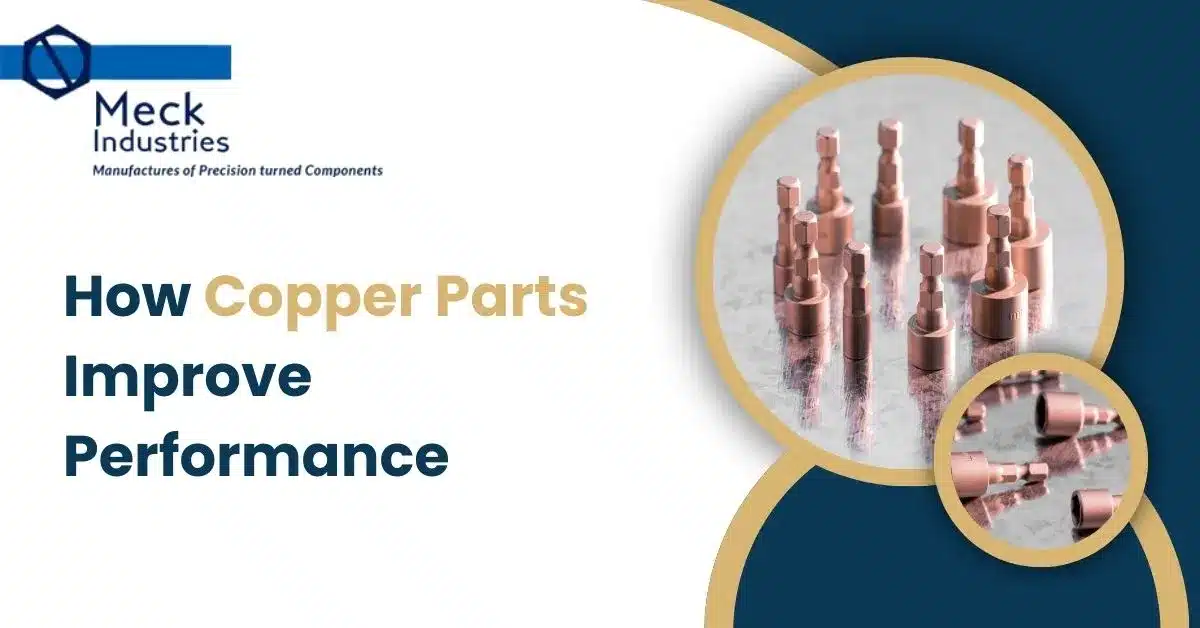
In modern manufacturing and engineering, Copper Parts are widely chosen for their ability to deliver superior efficiency, durability, and performance. From electrical equipment to automotive systems, Copper Parts help improve operational reliability and reduce system failures.
Table of Contents
1. Electrical Performance and Conductivity
Copper Parts provide excellent electrical conductivity, ensuring consistent power flow with minimal resistance.
This results in safer and more efficient electrical systems.
Key advantages of Copper Parts for electrical applications
- Reduced power loss and heat generation
- Stable current distribution under heavy load
- Increased reliability in switchgear and power transmission
- Extended lifespan due to low oxidation
2. Thermal Performance & Heat Management
Copper Parts offer exceptional thermal conductivity, making them ideal for systems requiring stable temperature control.
Where thermal performance matters most
- Heat exchangers & cooling systems
- Motor housings and coils
- High-temperature industrial assemblies
Result: Better performance, reduced overheating, and longer equipment life.
3. Durability & Corrosion Resistance
Copper Parts naturally resist rust, chemical reactions, and environmental damage.
Benefits of corrosion-resistant Copper Parts
- Minimal maintenance requirements
- Long service life in harsh environments
- Stable mechanical strength over time
4. Precision Manufacturing & Design Flexibility
Copper Parts are easy to CNC machine, bend, and shape with high accuracy, enabling precision assemblies.
Benefits during production
- Smooth finishing and tight tolerances
- Consistent repeatability in large production runs
- Ideal for valves, connectors, sensors, fittings, transformers
Looking for high-quality Copper Parts for industrial applications? Contact us today for quotes, samples, or custom manufacturing support.
Copper Parts vs Other Materials
| Parameter / Feature | Copper Parts | Aluminium Parts | Stainless Steel Parts |
| Electrical Conductivity | ~100% IACS (Benchmark) | ~61% IACS | ~2–3% IACS |
| Thermal Conductivity (W/mK) | 380–400 | 205–220 | 14–16 |
| Tensile Strength | 200–250 MPa | 130–150 MPa | 480–650 MPa |
| Corrosion Resistance | High | Moderate | Very High |
| Machinability | Excellent | Good | Moderate |
| Recyclability | 100% Efficient | 100% Efficient | ~85% |
| Approx. Lifecycle Cost | Low Maintenance | Affordable | Higher Maintenance |
| Best Use Cases | Electrical & Thermal Systems | Lightweight Structures | High Pressure & Strength Applications |
5. Sustainability & Recyclability
Copper Parts are 100% recyclable without losing performance value, supporting long-term cost savings and sustainability goals.
Why industries prefer recyclable Copper Parts
- Reduce raw material expense
- Lower carbon footprint
- Environment-friendly production
Industries Benefiting from Copper Parts
- Electrical & power distribution equipment
- Automotive electronics & EV systems
- HVAC and thermal regulation units
- Industrial valves & mechanical fittings
- Renewable energy and power infrastructure
Frequently Asked Questions
Why are Copper Parts widely used in electrical and electronic applications?
Copper Parts offer exceptional electrical conductivity, making them ideal for switchgear systems, wiring components, power transmission equipment, and high-performance connectors. Their ability to minimize energy loss enhances overall system efficiency.
Are Copper Parts resistant to corrosion and environmental damage?
Yes. Copper Parts naturally resist corrosion, oxidation, and chemical reactions, which increases product lifespan and ensures long-term stability even in harsh industrial environments such as marine, HVAC, and chemical processing.
How do Copper Parts improve the performance of automotive components?
Copper Parts provide superior thermal conductivity, allowing faster heat dissipation in braking systems, radiators, EV power modules, and fuel systems. This reduces overheating, boosts reliability, and improves vehicle safety.
Can Copper Parts be customized for OEM applications?
Absolutely. Copper Parts can be CNC machined, forged, or sheet-metal formed based on custom drawings and tolerances. OEMs in electrical, automotive, aerospace, and valve industries frequently use custom Copper Parts for precise performance.
What is the difference between Copper Parts and Brass or Aluminium components?
While brass and aluminium are cost-effective, Copper Parts offer significantly higher conductivity, better thermal efficiency, and superior corrosion resistance. This makes copper ideal for mission-critical engineering applications.
Conclusion
Copper Parts significantly improve performance by boosting electrical efficiency, supporting better heat management, enabling high-precision manufacturing, and delivering long-term durability. For industries focused on reliability and cost-effective performance, Copper Parts remain the superior choice.
Range of Products