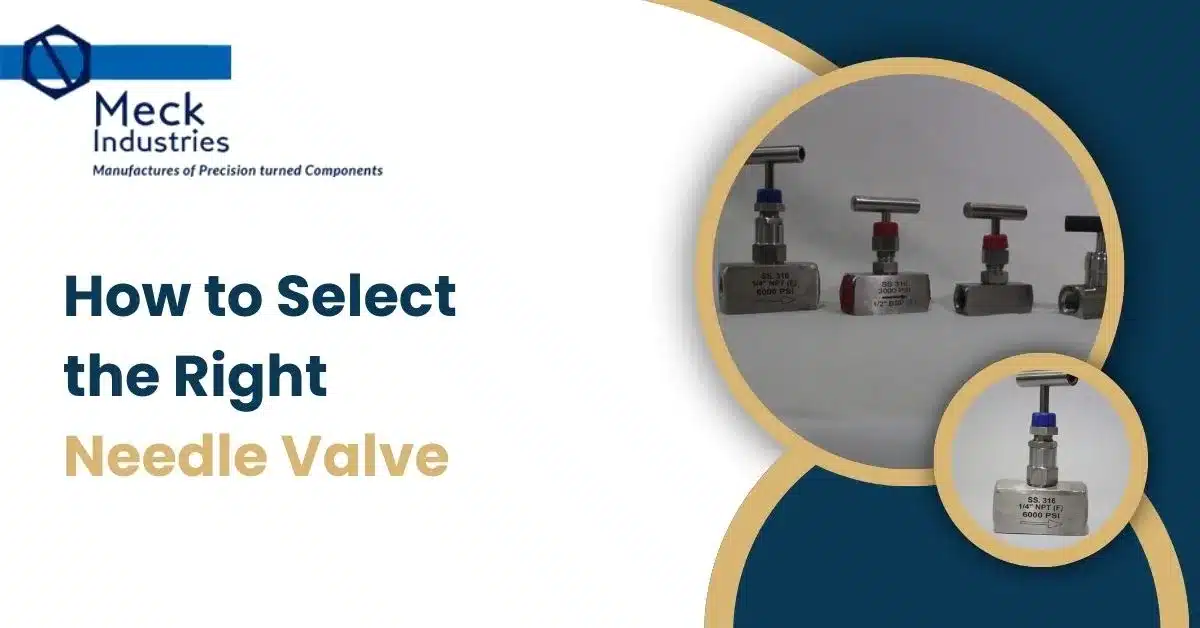
Choosing the correct Needle Valve for your system is critical for ensuring accurate flow control, safety, and long-term performance. A well-selected Needle Valve improves reliability, reduces maintenance cost, and delivers consistent flow regulation under varying conditions. In this guide, we explain how to evaluate and pick the right Needle Valve based on your specific needs.
Key Factors to Consider When Selecting a Needle Valve
1. Fluid or Gas Type & Compatibility
Your choice of Needle Valve material must match the fluid or gas being controlled. Factors to verify include:
- Corrosiveness (acidic, alkaline, solvents)
- Temperature range (cold fluids, steam, hot liquids)
- Pressure levels (low pressure, high pressure, pulses)
For instance, if your system handles corrosive chemicals or high-temperature fluids, opting for a stainless-steel Needle Valve or special alloy Needle Valve ensures durability and leak-proof performance.
2. Flow Rate & Control Precision
Needle Valves provide fine control over flow because of their tapered stem and seat mechanism. Consider:
- Minimum and maximum flow rate required
- Whether you need smooth throttling or on/off control
- Flow stability under load variation
If your process demands very precise flow regulation (e.g., dosing reagents, gas metering, analytical equipment), go for a precision Needle Valve with a fine-thread stem and accurately machined seat.
3. Pressure and Temperature Ratings
Every Needle Valve comes with specified maximum pressure and temperature ratings. When selecting:
- Confirm the system’s maximum working pressure (static and dynamic).
- Check for temperature extremes — some fluids may require valves rated for high heat or cold exposure.
- Factor in pressure surges or thermal expansion for safety.
A high-pressure Needle Valve is ideal when working under heavy load or high-pressure systems; make sure the valve’s material and construction match your demands.
4. Thread, Connection Type & Size
Compatibility with your piping or instrumentation is essential:
- Choose correct thread type (NPT, BSP, metric, etc.)
- Ensure spool-piece length and connection orientation match your setup
- Consider ease of installation and maintenance
For custom or unconventional setups, a custom Needle Valve configuration may be necessary — many manufacturers (like Meck Industries) offer customization to match exact specifications.
5. Sealing & Leak-Proof Design
A well-manufactured Needle Valve should provide tight sealing and minimal leak risk. Key sealing-related aspects:
- High-quality seats and packing materials
- Smooth machining and surface finish on the needle and seat
- Proper tolerance control to prevent seepage even under pressure
When in doubt, choose a CNC-machined Needle Valve for high precision, tight tolerance, and consistent sealing performance.
Ready for dependable needle valve solutions? Contact us to get high-quality, customized Needle Valves designed for your precise fluid control needs.
6. Maintenance, Durability & Material Choice
Long-term reliability often depends on build quality and materials. Evaluate:
- Corrosion resistance (especially for chemical or outdoor use)
- Wear resistance with repeated cycles
- Ease of maintenance (replaceable seats, packing, easy disassembly)
Durable Needle Valve designs — especially those with stainless-steel or alloy components — offer longer service life, lower maintenance costs, and reliable performance over time.
Needle Valve Selection Guide – Comparison of Types & Applications
| Requirement | Recommended Needle Valve Type | Why It Works |
| High-pressure fluid or gas | High-pressure stainless-steel Needle Valve | Durable, pressure-rated, leak-resistant |
| Corrosive fluids or chemicals | Alloy or stainless-steel Needle Valve | Resists corrosion and chemical attack |
| Low-flow precision dosing | Precision Needle Valve with fine-thread stem | Allows smooth, accurate adjustment |
| General industrial use | Standard Needle Valve with sealed seat | Balanced performance & cost-efficiency |
| Custom machine or special application | Custom Needle Valve (size, connection, material) | Tailored fit for specific requirements |
Steps to Select & Source the Right Needle Valve
- List your system specifications — fluid type, pressure, temperature, flow characteristics.
- Choose material and construction — stainless steel, special alloys, or standard steel depending on environment.
- Confirm connections and size — thread type, orientation, line size compatibility.
- Check manufacturing quality — CNC machining, smooth seat finish, proper sealing design.
- Specify required standards — pressure rating, temperature tolerance, corrosion resistance.
- Request samples or datasheets — examine tolerances, finish quality, and sealing integrity.
- Test under real conditions — run at expected pressure, temperature, and fluid conditions before final installation.
Why Professional-Grade Needle Valves Matter?
A correctly selected Needle Valve reduces downtime, avoids leaks, and ensures consistent operation, even under demanding conditions. High-quality valves deliver precise control, minimize maintenance, and help maintain safety standards — especially when handling hazardous fluids or operating under variable pressures. Investing in a reliable Needle Valve up front saves costs in the long run by preventing failures, leak events, and equipment damage.
Frequently Asked Questions
What factors should I consider when selecting a Needle Valve?
When selecting a Needle Valve, consider pressure rating, operating temperature, material compatibility, thread type, fluid type, and required flow accuracy. Choosing the right specifications ensures a longer lifespan and reliable performance.
Which material is best for a Needle Valve?
The ideal material for a Needle Valve depends on the application. Stainless steel is preferred for high-pressure and corrosive environments, while brass Needle Valves are suitable for low-pressure and general industrial fluid control systems.
Where are Needle Valves commonly used?
A Needle Valve is widely used in industries like oil & gas, chemical processing, laboratory instrumentation, power plants, and fluid control systems where precise flow regulation is required.
What size Needle Valve should I choose?
Needle Valve size is selected based on flow requirements, inlet/outlet connection size, and pressure capacity. Oversized or undersized Needle Valves can affect system accuracy and performance.
How does a Needle Valve improve flow control?
A Needle Valve improves flow control by using a fine-tapered needle stem that allows gradual adjustments, resulting in precise regulation for sensitive fluid operations.
Conclusion
Selecting the right Needle Valve involves careful consideration of fluid type, flow requirements, pressure and temperature conditions, construction quality, and application-specific needs. By evaluating these factors and choosing precision-engineered Needle Valve solutions — ideally CNC-machined and properly sealed — you ensure reliable performance, long-term durability, and optimal system control.
When your application demands accuracy, safety, and high performance, choosing the right Needle Valve is not optional — it’s essential.
Range of Products