In the world of precision engineering, even the smallest variation can make a significant difference. This is especially true for precision needle parts, which are commonly used in medical devices, fuel injectors, fluid control systems, and laboratory equipment. These components require tight tolerances to ensure performance, safety, and reliability.
Table of Contents
Let’s explore why tolerances matter, how they impact manufacturing accuracy, and what best practices manufacturers use to maintain dimensional integrity in needle parts.
What Are Tolerances in Precision Machining?
Tolerances define the allowable deviation in a part’s dimensions during manufacturing. They determine how much a dimension can vary from its nominal (intended) size without affecting the part’s performance or assembly.
For example, if a precision needle is designed to be 1.500 mm ±0.005 mm, its diameter can range between 1.495 mm and 1.505 mm — still meeting design standards.
In precision needle parts, these tolerances are often measured in microns (µm) because even minute deviations can impact fluid flow, injection accuracy, or sealing efficiency.
Why Tolerances Matter in Precision Needle Parts?
The importance of tolerances in needle components goes beyond simple measurements. It affects multiple aspects of product performance and production quality.
1. Ensures Functional Accuracy
Needle parts used in medical syringes, fuel injectors, or nozzles must deliver fluids or gases with exact precision. Any deviation in internal diameter or taper can affect flow rate and lead to malfunction or inconsistent dosing.
2. Guarantees Interchangeability
Tight tolerances allow parts to fit perfectly within assemblies without custom adjustments. This ensures easy replacement, reduces downtime, and maintains consistency across mass-produced parts.
3. Reduces Wear and Tear
Consistent tolerances minimize friction between moving components, which enhances product lifespan and mechanical stability, particularly in high-speed injection systems.
4. Enhances Safety and Reliability
In medical and pharmaceutical industries, tolerance precision is a regulatory requirement. Poorly machined needle components can cause dosage errors or leaks, leading to safety risks.
5. Improves Manufacturing Efficiency
Controlled tolerances reduce the need for rework, scrap, and quality rejections. This leads to cost savings and higher productivity in production lines.
Typical Tolerance Levels for Precision Needle Parts
| Parameter | Tolerance Range (µm) | Application Example | Impact of Deviation |
| Outer Diameter (OD) | ±2–5 µm | Medical Needles, Injector Pins | Affects fit, flow precision, and sealing |
| Inner Diameter (ID) | ±3–8 µm | Fluid Transfer, Inkjet Nozzles | Alters flow rate and pressure consistency |
| Concentricity | ≤10 µm | Multi-hole Injection Needles | Impacts even fluid distribution |
| Surface Roughness (Ra) | ≤0.2 µm | Hypodermic Needles, Precision Valves | Affects flow smoothness and wear resistance |
| Taper Accuracy | ±0.1° | Fluid Control Needles | Influences injection precision |
How Tolerances Are Maintained in Manufacturing
Achieving tight tolerances in needle machining requires advanced equipment, inspection systems, and quality control practices. Here are key factors that ensure consistent precision:
- Advanced CNC Machining
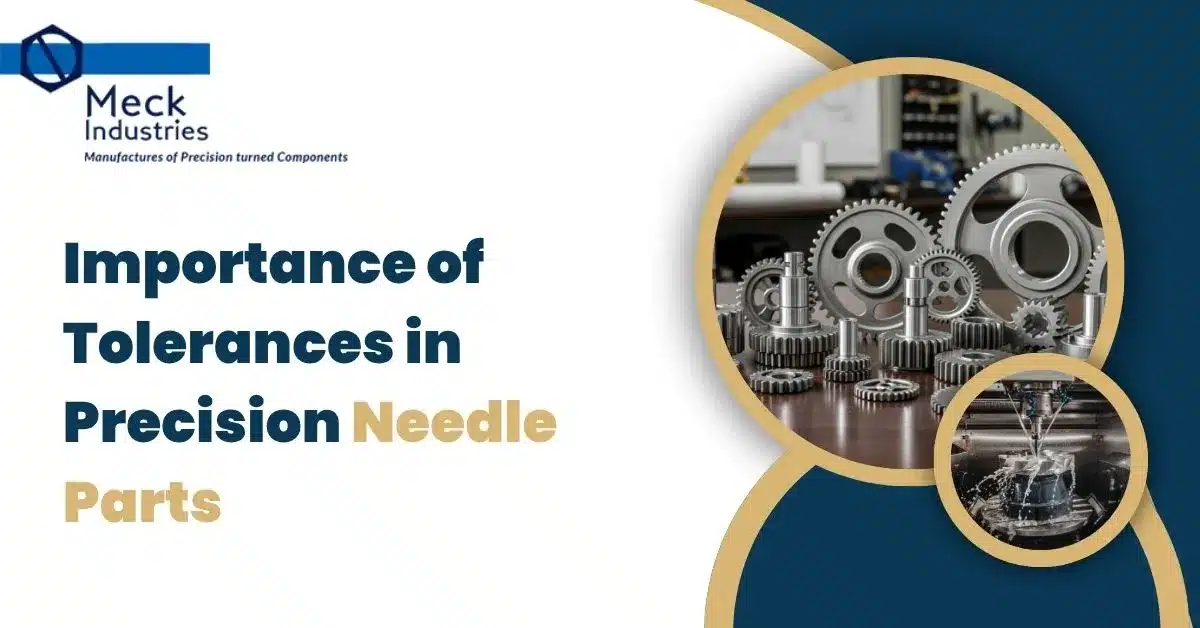
Modern CNC Swiss-type lathes and micro turning machines are used to produce precision needle parts. These machines provide repeatable accuracy in the range of microns.
- Material Selection
Materials like stainless steel, titanium, and brass are commonly used due to their strength, corrosion resistance, and machinability. Each material behaves differently under cutting forces, so tolerances are adjusted accordingly.
- Thermal Stability
Temperature fluctuations during machining can cause expansion or contraction of metals. Manufacturers maintain controlled environments to prevent dimensional distortion.
- Inspection and Metrology
Precision needle parts undergo CMM (Coordinate Measuring Machine) and optical measurement inspections to verify tolerances. This ensures every piece meets the specified dimensional criteria.
- Tool Calibration
Cutting tools, grinding wheels, and polishing systems are regularly calibrated and replaced to maintain dimensional accuracy and surface finish.
Looking for precision-turned needle parts with micron-level accuracy? Contact us — your trusted expert in high-tolerance, quality precision components.
Applications Where Tolerances Define Performance
- Medical and Surgical Devices
In medical syringes, hypodermic needles, and catheters, even a few microns of deviation can alter dosage or cause patient discomfort. Therefore, manufacturers must comply with ISO 13485 and FDA standards for precision machining.
- Automotive and Fuel Systems
Fuel injector needles demand ultra-tight tolerances for optimal atomization and combustion efficiency. Any variance can affect fuel economy and emissions.
- Industrial Automation
Precision dispensing systems and inkjet printers rely on consistent nozzle tolerances to ensure uniform material deposition.
- Aerospace and Defense
Needle valves in aerospace systems handle high-pressure fluids. Maintaining dimensional integrity ensures safety, leak prevention, and consistent flow control.
Challenges in Maintaining Tight Tolerances
While essential, maintaining tolerances in the micron range comes with several challenges:
- Tool wear affects consistency over long production runs.
- Material inconsistencies can cause unpredictable deformation.
- High inspection costs add to production expense.
- Operator expertise is crucial in achieving consistent accuracy.
Manufacturers overcome these issues through automation, real-time monitoring, and quality management systems (QMS) to maintain repeatability.
Frequently Asked Questions
What are tolerances in precision needle parts?
Tolerances define the permissible variation in part dimensions, ensuring each precision needle component functions accurately and fits perfectly within assemblies.
Why are tight tolerances important in needle manufacturing?
Tight tolerances guarantee consistent performance, reliability, and safety in applications like medical syringes, fuel injectors, and fluid control systems.
How does Meck Industries maintain micron-level accuracy?
Meck Industries uses advanced CNC machines, precise metrology tools, and strict quality checks to achieve and maintain dimensional accuracy within microns.
What materials are commonly used for precision needle parts?
High-grade stainless steel, titanium, and brass are preferred for their durability, corrosion resistance, and machinability in precision manufacturing.
Which industries benefit from precision needle parts?
Precision needle components are widely used in medical devices, automotive fuel systems, fluid control systems, and industrial automation equipment.
Conclusion
The importance of tolerances in precision needle parts cannot be overstated. From ensuring functional reliability to improving sustainability, maintaining tight dimensional control is the backbone of high-performance manufacturing.
Manufacturers who invest in advanced machining technology, skilled operators, and rigorous quality assurance systems stand out in industries where micron-level accuracy defines excellence.
Range of Products