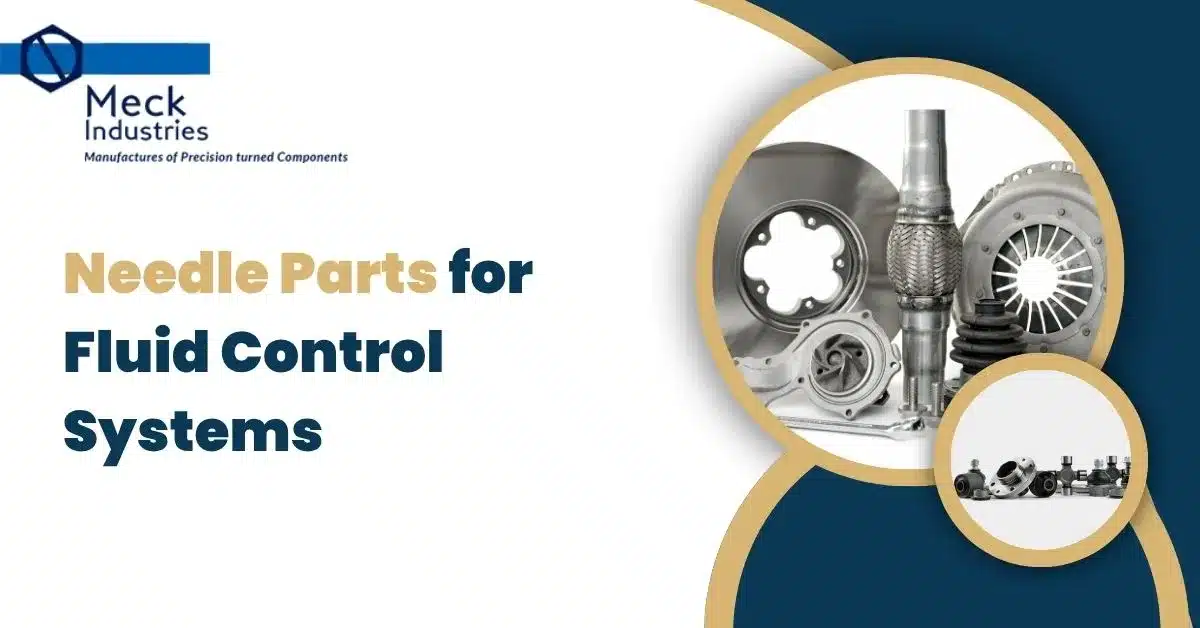
In many fluid-control systems, especially where precision and reliability are critical, needle parts—such as the fine, tapered “needle” and its matching seat—play a vital role in regulating the flow of liquids and gases with exceptional accuracy. These components enable very gradual throttling, secure sealing, and stable performance, making them ideal for applications in industries like instrumentation, chemical processing, and high-pressure systems.
Table of Contents
What is a Needle Valve & Its Core Components
A needle valve consists of a slender, tapered “needle” (plunger) that seats into a matching orifice. By adjusting the position of this needle via a finely threaded stem, very precise adjustments in fluid flow are possible.
Key components include:
- Needle / Plunger: The conical stem that regulates flow.
- Seat: The matching surface against which the needle rests.
- Stem & Handle: The mechanism for adjusting needle position.
- Packing / Seals: Prevent leakage around the moving needle.
These parts are often made from stainless steel, brass, or other alloys—chosen for durability, corrosion resistance, and flow-control precision.
Why Needle Parts Matter in Fluid Control Systems
Needle parts are essential because they offer:
- Ultra-Precise Flow Control
Thanks to the fine threading and tapered needle, very small adjustments in flow are possible—ideal for metering, sampling, and instrumentation. - Tight Shutoff
When the needle is seated, it provides a reliable seal, preventing leaks even at low flow rates. - High Pressure & Temperature Tolerance
Needle valves can operate under high pressure and temperature conditions, making them suitable for rigorous industrial environments. - Compatibility With Various Fluids
They can handle gases, liquids, steam, and corrosive chemicals—making them versatile. - Durability & Reliability
Materials like stainless steel ensure long-term performance and reduced maintenance.
Applications of Needle Parts in Fluid Control Systems
Needle parts are used in a wide range of industrial sectors. Here are some major applications:
1. Process Control Industries
In chemical and petrochemical plants, needle valves regulate feed lines, dosing of chemicals, and instrumentation.
2. Oil & Gas
Used for sampling, pressure regulation, and metering in pipelines and refineries.
3. Power Generation
In steam and water systems, needle valves control flow to turbines and auxiliary instrumentation.
4. Laboratory & Instrumentation
Needle valves are critical in labs for gas chromatography, test rigs, and precise flow measurement.
5. Water Treatment & Dosing
They regulate chemical dosing (like pH adjusters) and filtration flows in water treatment systems.
Types of Needle Parts for Specific Fluid Systems
| Needle Part | Common Material | Use Case |
| Needle / Plunger | Stainless Steel, Brass | Fine flow regulation |
| Seat | Metal or Composite | Provides sealing surface |
| Stem & Handle | Steel, Stainless Steel | Adjust control position |
| Threaded Inserts | Metal / Alloy | Mounting in larger assemblies |
| Seals / Packing | PTFE, Graphite | Prevent leakage around needle |
Design Considerations for Optimal Needle Valve Performance
When designing or specifying needle parts, engineers must consider:
- Material Compatibility: Selecting the right alloy for fluid chemistry and temperature.
- Tolerance & Finish: Fine machining ensures smooth movement and tight sealing.
- Thread Pitch: Determines how much the needle moves per turn (for flow sensitivity).
- Sealing and Packing: Must withstand repeated use and harsh environments.
- Actuation Mechanism: Manual, pneumatic, or electric—depending on system design.
Need precision needle parts for your fluid control system? Contact us today for custom-designed, high-quality CNC needle components tailored to your specific industrial needs.
Advantages of Quality Needle Parts from Trusted Manufacturers
By sourcing needle parts from reliable manufacturers, systems benefit from:
- High Throughput Accuracy: Critical for automated processes and sampling.
- Lower Leakage & Maintenance: High-quality metal parts reduce wear and leak risk.
- Longer Service Life: Robust materials mean less frequent replacements.
- Improved Safety: Precise flow control reduces risk of overpressure or surge.
- OEM Customization: Tailored needle designs to suit unique systems or regulated industries.
Challenges and Best Practices
While needle parts are powerful, they come with challenges:
- Clogging Risk: Small orifices can trap particulates. → Use proper filtration upstream.
- Slow Operation: Many turns of the stem are needed—consider actuated designs for automation.
- Material Wear: Ensure material choice matches fluid properties for durability.
- Position Monitoring: Without an indicator, operators may misjudge flow state. → Use rising-stem designs or position feedback.
Choosing the Right Supplier for Needle Parts
Look for a manufacturer who offers:
- Expertise in CNC machining and tight tolerances
- Experience with fluid systems in industries such as oil & gas, chemicals, instrumentation
- High-quality material selection (e.g., stainless steel)
- Stringent quality control, including material traceability and testing
- Custom design capabilities for OEM or specialized systems
Frequently Asked Questions
What fluid types are needle parts compatible with?
Needle parts handle a wide range, including gases, steam, water, and corrosive chemicals.
Can needle valves provide tight shutoff?
Yes—the tapered needle and seat design enable very precise sealing.
Are needle parts only made of stainless steel?
No—materials like brass, carbon steel, and high alloys are also used depending on the application.
Do needle valves work for high-pressure systems?
Absolutely. There are high-pressure needle valves designed for precise flow control even under demanding pressures.
Conclusion
Copper’s durability comes from its powerful combination of corrosion resistance, mechanical strength, thermal performance, and manufacturability. At Meck Industries, we transform this naturally durable metal into high-precision parts engineered for tough industrial applications. When long service life, reliability, and consistent performance matter, copper parts remains unmatched—and we ensure you get the best of it.
Range of Products