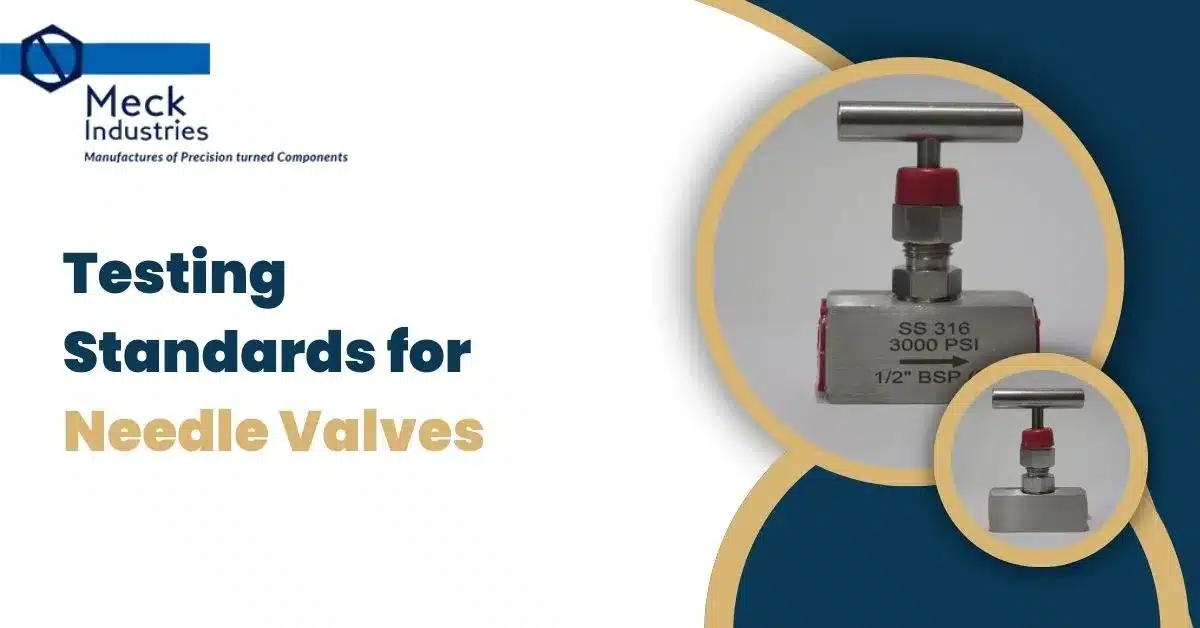
Needle valves are critical components in industrial, automotive, and electrical systems, ensuring precise flow control of liquids and gases. High-quality needle valves not only enhance performance but also ensure safety and reliability. At Meck Industries, we adhere to rigorous testing standards to maintain the durability, accuracy, and efficiency of every needle valve manufactured.
Comprehensive Testing Standards for Needle Valves
1. Dimensional Accuracy
Needle valves are precision-engineered components. Every valve undergoes meticulous dimensional verification using calibrated measuring instruments. Maintaining strict tolerances ensures seamless integration into electrical, automobile, and industrial systems.
2. Pressure and Leak Testing
Pressure testing is crucial to confirm that needle valves can withstand operational pressures without leaks or deformation. Hydraulic and pneumatic testing is performed to check valve integrity, ensuring leak-free operation under various pressure conditions.
3. Material and Mechanical Testing
Needle valves are manufactured using ferrous and non-ferrous metals, including copper, brass, stainless steel, and aluminium. Material testing includes hardness, tensile strength, and corrosion resistance checks, ensuring durability and long service life.
4. Flow and Functional Testing
Functional tests simulate real-world conditions by assessing the flow control precision and responsiveness of the valve. This ensures smooth operation, accurate regulation of flow, and reliable performance in critical applications.
5. Compliance with Industrial Standards
All testing processes comply with industry standards for safety, performance, and quality. Adhering to national and international norms ensures that Meck Industries’ needle valves are trusted by clients across electrical, automotive, and industrial sectors.
Looking for precision-tested needle valves you can trust? Contact us today for high-quality, performance-verified solutions.
Why Testing Standards Matter?
Proper testing of needle valves ensures:
- Operational Safety: Prevents leaks and system failures.
- High Performance: Guarantees accurate flow control.
- Longer Lifespan: Reduces wear and maintenance costs.
- Customer Satisfaction: Meets or exceeds industry expectations.
At Meck Industries, our trained and experienced staff, with over 20 years of expertise, ensures every valve undergoes rigorous quality assurance before delivery.
Frequently Asked Questions
What are the key testing standards for needle valves?
Needle valves are tested for dimensional accuracy, pressure resistance, leak-proof performance, material strength, and flow control efficiency to ensure safety and precision.
Why is pressure testing important for needle valves?
Pressure testing verifies that needle valves can withstand operational pressures without leaks or damage, ensuring reliable performance in critical industrial and automotive applications.
Which materials are commonly tested in needle valve manufacturing?
Needle valves are made from copper, brass, stainless steel, and aluminium, and undergo material testing for hardness, corrosion resistance, and tensile strength.
How does functional testing improve needle valve performance?
Functional testing simulates real-world operating conditions to check flow control accuracy, responsiveness, and smooth operation, ensuring consistent system performance.
How do Meck Industries’ testing standards benefit customers?
By adhering to rigorous testing and industry standards, Meck Industries delivers high-precision, durable, and reliable needle valves, reducing maintenance costs and ensuring operational safety.
Conclusion
Needle valves are small components with a significant impact on system performance and safety. Implementing stringent testing standards, as done at Meck Industries, guarantees precision, reliability, and durability.
Range of Products